 Get in touch
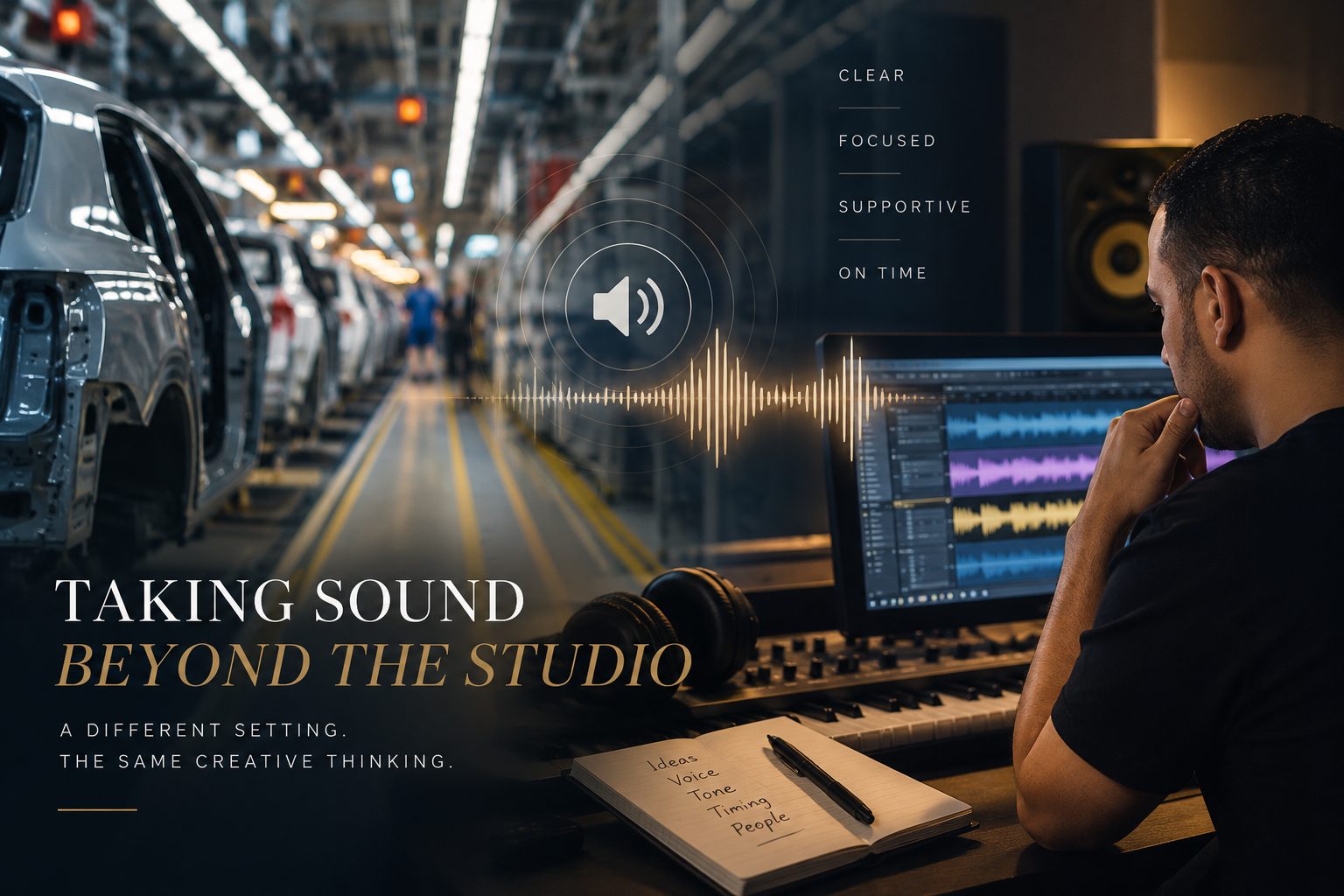
Most of my sound work has happened in studios: writing, producing and shaping music for release. This project brought those same skills into a different setting — BMW / MINI Plant Oxford — and explored how thoughtful sound design could improve an everyday workplace experience.
Where the idea came from
My knowledge of production environments has given me an appreciation for the smaller details that shape a workplace. Alongside the equipment, processes and activity, there is the experience of the people working there and those visiting. Sound contributes to that experience, even when we rarely stop to think about it.
The idea began when I noticed a visitor’s reaction to an unexpected audio cue. It was a brief moment, but it stayed with me. Could a practical reminder attract attention in a way that felt more natural, friendly and considered?
From a music-production perspective, it was an interesting challenge. A sound can communicate far more than its basic message. Its character, tone and delivery influence how we respond to it. Something only a few seconds long can still deserve careful thought, particularly when people hear it regularly.
I presented the idea to the General Manager during a meeting. He said they loved it and would like to implement it across the business. That encouragement helped turn a small observation into a practical sound-design project.
Approaching the sound design
Working in music has taught me to listen closely to how the different elements of a sound work together. The voice, the pace, the musical character and the space around a message all affect how it feels.
I brought that same attention to this project. The aim was to create sounds that were clear and distinctive, with a friendly delivery that suited their surroundings.
A short reminder has a particular job to do. It needs to be understood easily and attract enough attention to be useful. When it becomes part of someone’s working day, how it feels to hear also matters.
That balance shaped my approach. I considered the tone of the voice, the timing of each phrase and how musical elements could contribute to the overall experience. Each choice served the same purpose: making the sound feel supportive and appropriate to its setting.
This was a different application of familiar skills. In a studio, I might be thinking about how a vocal connects with a listener or how a musical phrase creates a feeling. Here, that attention was directed towards something brief, practical and part of everyday life.
Hear the difference
Turn your sound on, then choose a sound to play.
Listening to the people using it
Feedback from the people hearing the sounds was an important part of the process. They could describe the everyday experience in a way that listening during the design stage alone could never fully capture.
The response was very positive. Feedback highlighted a lift in staff mood and morale, with the musical prompts particularly well received. They brought a lighter, more upbeat energy to the working environment, adding something positive to the everyday routine.
That response gave the project another dimension. The sounds had a practical purpose, but the way people felt about hearing them mattered too. Hearing that they contributed to a more positive atmosphere was an encouraging part of the work.
One piece of feedback was especially meaningful. A person living with vertigo reported a substantial improvement in his symptoms after the new sounds were introduced, making a real difference to his daily wellbeing.
His experience stayed with me. Alongside the wider feedback about mood and morale, it showed how meaningful a change to an everyday sound could be for the people hearing it.
Same thinking, different setting
Bringing an idea into an established workplace takes practical thought as well as creativity. There is a journey between recognising an opportunity and developing something people can use.
That is a part of the work I enjoy: seeing a possibility, sharing it with the right people and helping find a way to bring it to life.
The setting was different from a music studio, but the thinking was familiar. Listen carefully, understand what is needed and pay attention to the people who will experience the result.
Sometimes, a small observation is enough to begin something worthwhile.